What is phishing?
Why you need to protect yourself
With phishing, criminals try to get personal data such as credit card numbers or online banking access data. To do this, they use emails, text messages, or letters that look like they come from companies like ours. EOS will never ask you for a password, PIN, full card number, or CVV code. We will never ask you to pay through a link in a text message. To check a claim or pay online, please always use the secure payment function in the MyEOS portal.
How can I report a scam?
Have you received a suspicious email or letter from EOS?
Nowadays, it is hard to tell whether a message is genuine or a scam. If you are not sure a message is from us, do not reply and do not click any links. Call us at +389 2 3200 400 or write to us at [email protected].
Do you think someone has used your personal data? Then write to us right away at [email protected] and at [email protected]. Attach a copy of your ID. If you have filed a police report, attach it as well. While we check your case, collection is paused.
Watch out: a phishing example
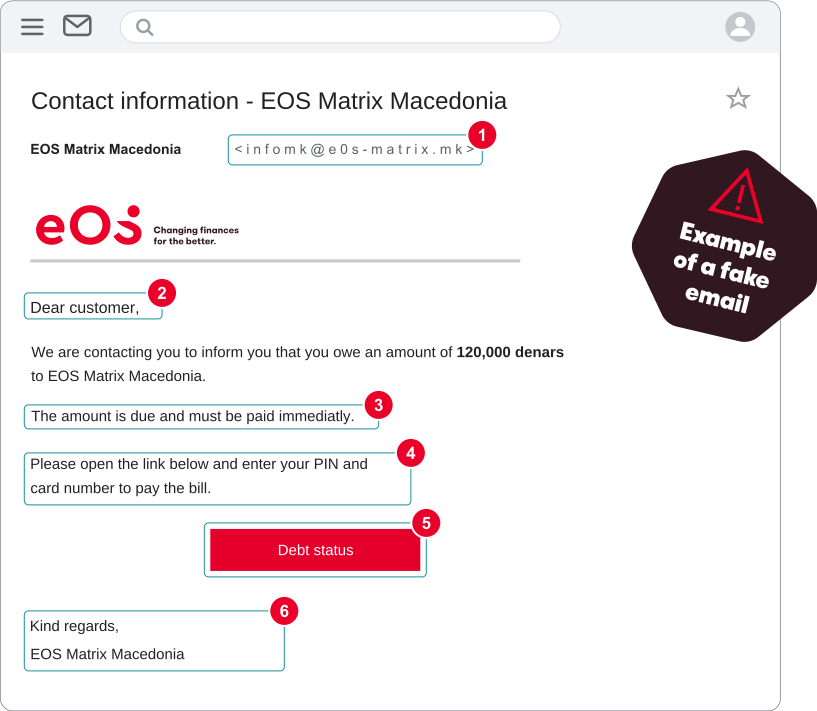
Emails or messages from scammers can look surprisingly genuine. But there are signs that make them easy to spot.
- Click on the sender address to see the actual sender. It may be made up, for example E0S with a zero instead of the letter O.
- No direct form of address, or a generic one (for example “Dear customer”).
- Spelling and grammar mistakes.
- A request to pay through a link in a text message or to give a password, PIN, card number, or CVV code.
- A request to click on an unknown link.
- Missing sender information.
If you are not sure, do not reply to the message.